Concrete Contractors in Port Orange and the City Building Division
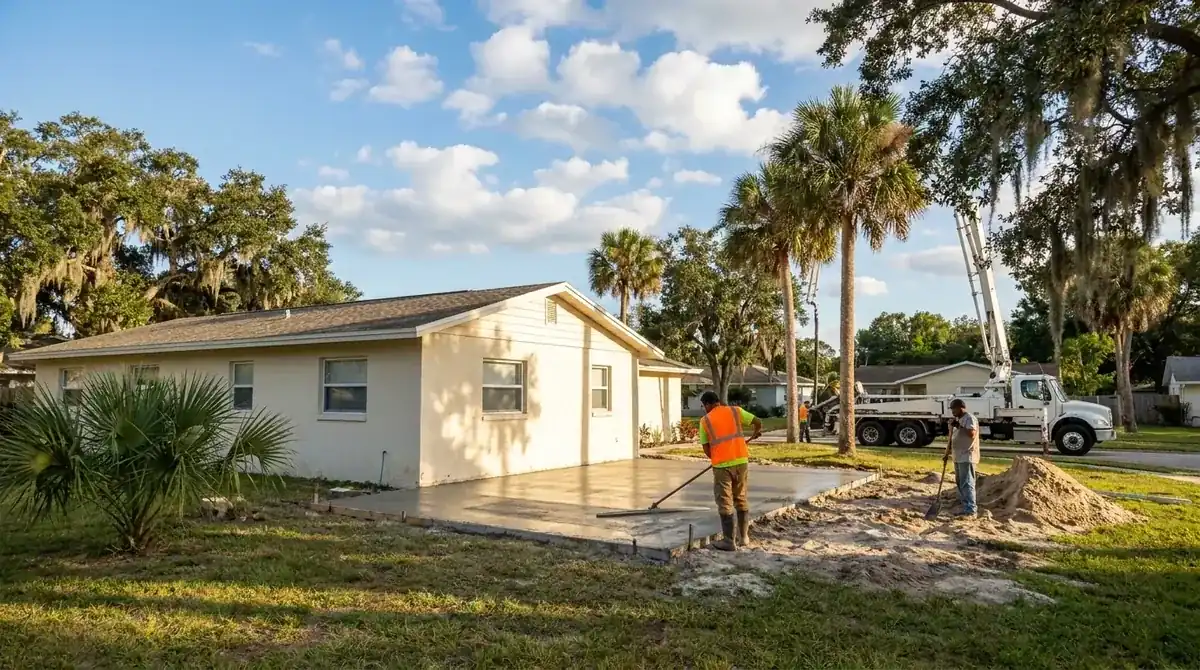
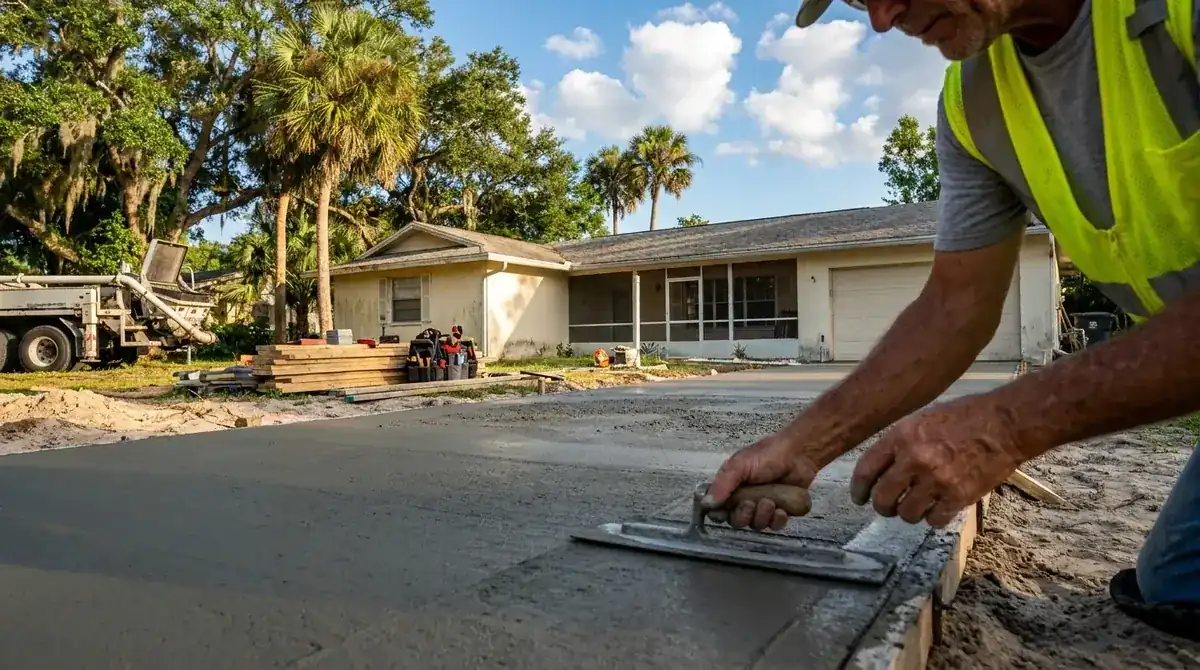
Inside the city limits, concrete work goes through the Community Development Building Division. You apply through the city's SmartGov portal, and the checklist has to be uploaded complete or the application "will not be processed." Those are the city's words, not ours. So we send the full package the first time.
The city's permit flyer counts a concrete driveway or walkway and a paver patio or driveway as permit work. It also tells owners to call the Building Division before starting anything. Begin before the permit is issued and the application fee doubles. That flyer is from 2018. Call the office and ask what's changed since.
If you elect a private provider for plan review, Port Orange requires private inspections too. HB 803, the 2026 under-$7,500 exemption, has its own city page and request form. The city treats accessory structures and freestanding masonry walls as structural, and the exemption never covers a lot that sits partly in a flood hazard area. The Building Division decides whether your flatwork qualifies. Other desks around the county are laid out in the Volusia permit guide.
The 24-Foot Driveway Cap, the 40 Percent Rule and Circular Drives
Port Orange puts driveway geometry right in its Land Development Code, Chapter 12, Section 3. Before a single form goes down for a new or widened Port Orange driveway, our concrete contractors in Port Orange check your lot against these numbers.
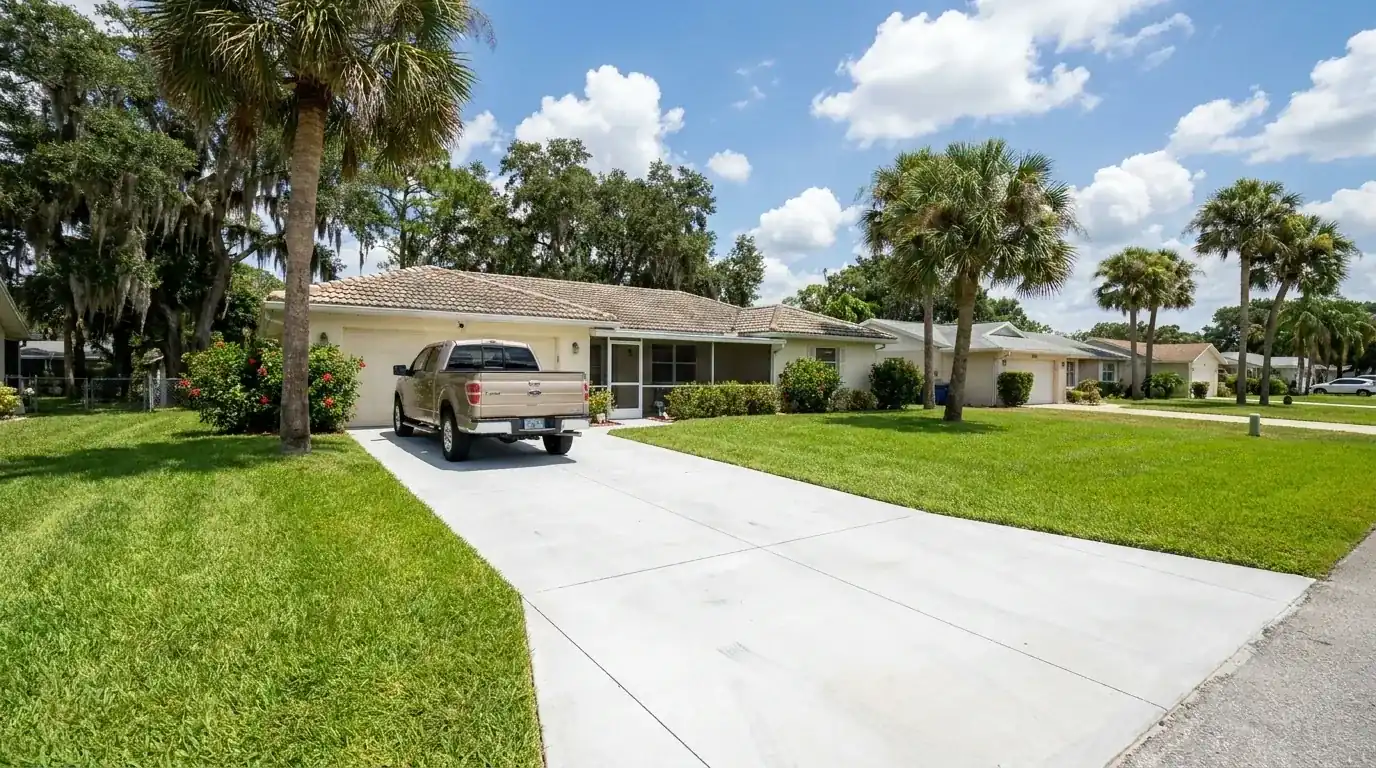
- A standard front-yard driveway for a single-family or duplex home runs 10 feet wide at minimum and 24 feet at maximum. The city can approve wider if the driveway is proportional to the house, the garage spaces and the lot.
- A circular driveway is 10 to 12 feet wide and needs at least 80 feet of lot frontage.
- Driveway and parking coverage in the front yard can't pass 40 percent, and pavers count as paving.
- Coverage has to stay directly in front of the garage or in the side yard. An expansion can't creep toward the middle of the front yard, unless it's a circular driveway.
- On a local street, the nearest edge of the driveway sits at least 5 feet off the side line. On a minor collector it's 7.5 feet.
- You get one access point per parcel. A second takes 100 feet of frontage on a local street, or 150 on a minor collector.
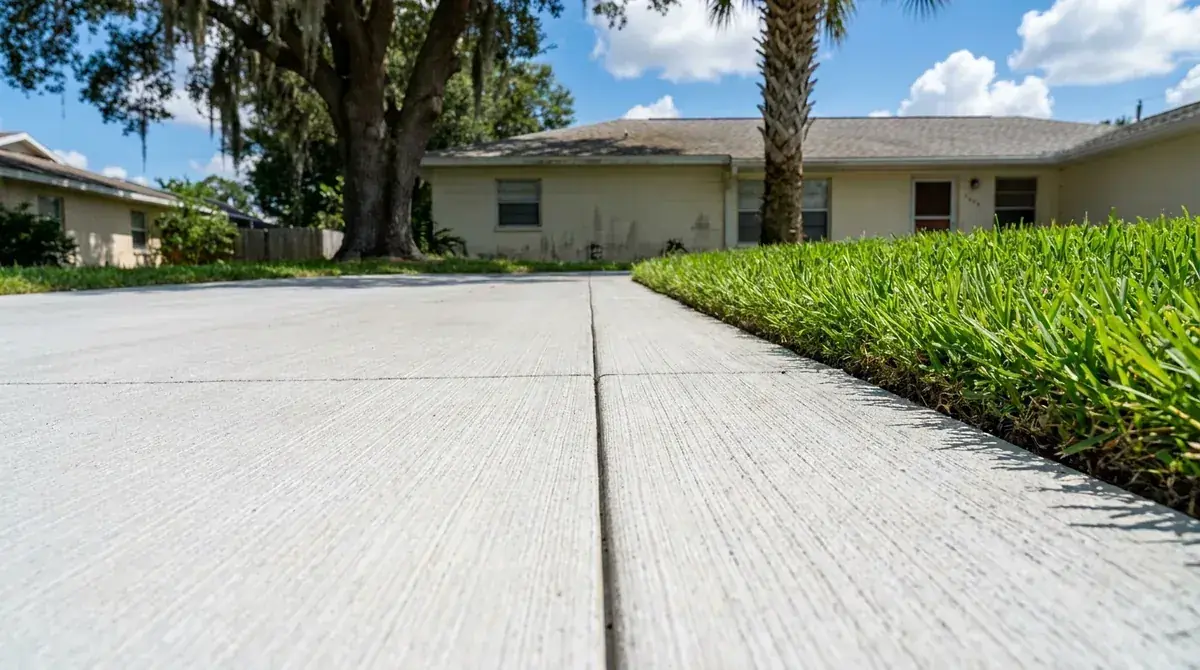
Parking wider than the cap, or not perpendicular to the street, has to be screened under a mitigation proposal the city reviews. Grass and dirt don't count as an approved front-yard parking surface, but concrete, contained loose material inside a rigid border, and paver strips do. Want a 30-foot pad for the boat? You'll have the screening talk before the pour. The stamped concrete vs pavers guide can help you pick a surface.